

A Future for the Texas Church
How Multi-cultural Communities are Interlaced at the Church
“The world is coming to Texas,” said Emmanuel Roldan, DMin, as he reflected on the unique role and tremendous opportunity that Truett Seminary has to equip future pastors and ministry leaders to serve local congregations.
In a state where communities are shaped by layers of culture, language, and heritage, bilingual churches are stepping up to serve their members in more ways than one. Truett faculty, staff, and alumni are actively living into this opportunity by serving local congregations and cultivating meaningful connections through culturally responsive, bilingual worship and outreach. These efforts not only bridge generational and cultural gaps but also reflect the rich diversity of the Kingdom of God here in Texas.
Emmanuel Roldan and Primera Iglesia Bautista De Waco
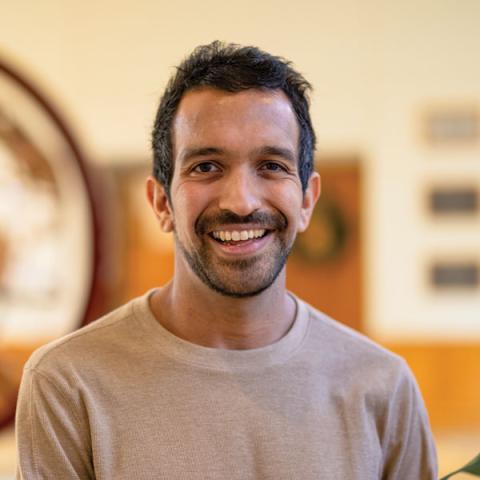
An example of this work is Emmanuel Roldan, a Truett alumnus who earned his Master of Divinity and Doctor of Ministry at the Seminary. Since 2016, Roldan has faithfully been serving as pastor of Primera Iglesia Bautista de Waco. “When the church first approached me about the job, they were looking for a pastor with three specific criteria,” said Roldan. “Someone who was younger, had a theological education, and was bilingual.”
At the time, the church had existed for over 80 years, with most ministries conducted primarily in Spanish. As the congregation looked to the future generations, they saw fewer members speaking Spanish. “Our church members recognized a growing disconnect with the language, and they wanted to reach their children and grandchildren.” Out of this need, a bilingual service was born. “In one service, we speak in both English and Spanish,” said Roldan. “Sentence by sentence, thought by thought–we go back and forth.”
The bilingual format created space for others to be able to attend the church, including White/Anglo community members interested in learning Spanish and pursuing racial reconciliation. In a congregation that was once 100 percent Latina/Latino, this was an opportunity “to bear witness to other churches on what it looks like to navigate two worlds,”
said Roldan.
Now, eight years after implementation, 80 percent of the congregation is bilingual with 10 percent only speaking Spanish and the other 10 percent only speaking English. “It fits who we are as a congregation, and so many beautiful things that come from blending the cultural experiences,” explains Roldan. “We have international students interested in our church now because Hispanic culture, with its focus on home, family, tradition, and the sense of togetherness, reminds them of their own culture.”
Jangho Jeremiah Jo and the Korean Baptist Church of Waco
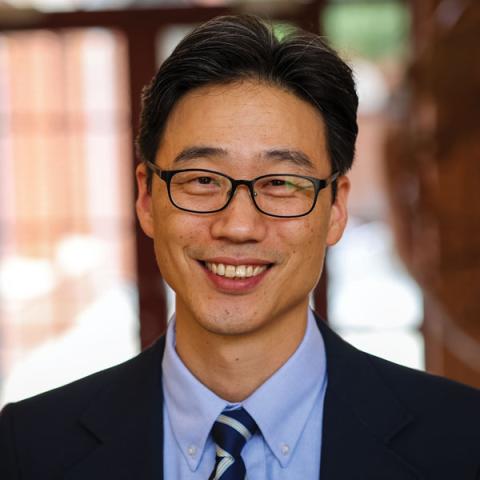
Like Roldan, Jangho Jeremiah Jo, PhD, lecturer of Christian Theology at Truett, is living on mission both inside and outside the halls of the Seminary while he serves as the lead pastor of the Korean Church of Waco.
Born and raised in Korea, Jo came to Waco to pursue doctoral work at Baylor University. Shortly after his arrival, Jo was invited to lead the church’s college ministry. Then, after taking the role, the lead pastor stepped down. “Knowing that they could not support a full-time minister, I took this as a calling from the Lord to step up in a larger capacity.”
Now, more than 10 years later, Jo continues to lead faithfully the church. “When I started, we were an immigrant church where almost everyone was Korean speaking,”
said Jo.
Several years into working at the church, a pivotal moment came during a church retreat when a visiting missionary challenged the congregation to “not be an island in this city.” As Jo reflected on this, he said, “That was a huge wake-up call for all of us. We were all Korean, so the natural fit was to be fully Korean without being open to other cultural ways.” From then on, the church focused on challenging this mindset.
The following semester, the church welcomed several English-speaking Korean students. In response to this, they created a translation team and began offering devices for simultaneous translation. They also added an afternoon service in English specifically geared toward college students.
“If we remained a purely Korean speaking congregation, we wouldn’t be able to serve effectively,” said Jo. “Now, our average member is pretty young, and most everyone can understand English, so we were able to embrace the English-speaking students.”
Today, the Korean Church of Waco is a bilingual, multicultural home. The church serves young families, international students from Korea, China, Malaysia, and Africa, and second-generation Korean Americans—many of whom primarily speak English. Once a month, the church gathers for an all-English worship service, a decision made to welcome and include English-speaking members. Jo himself leads the service. “It’s challenging for me as someone who primarily speaks Korean,” he says, “but I know I need to speak in English to embrace all our members—just like I do in my classroom.”
In leading with a hospitable mindset, Jo pointed to Jeremiah 29 where the instruction is to “seek the peace and prosperity of the city” and to live fully–even in a foreign land. “It’s such an interesting command. If we are able to do this, then we can cross cultural boundaries to find fellow citizens of the Kingdom everywhere,” Jo said.
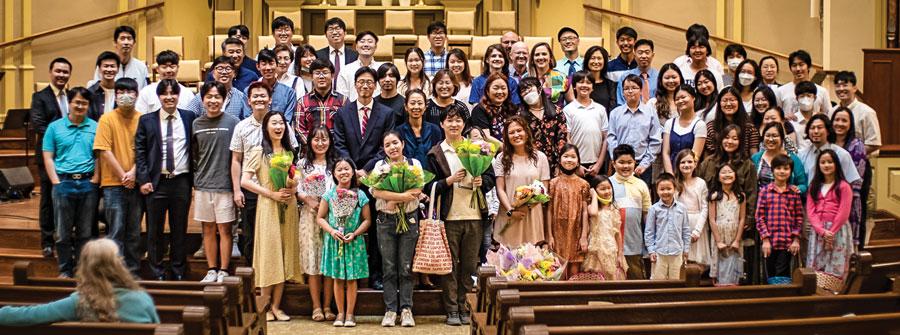
This theological and cultural adaptability is what binds churches like Primera Iglesia Bautista de Waco and the Korean Church of Waco to the diverse communities they serve.