

A Thread in the Ongoing Fabric of Women in Ministry
Remaining Faithful to Serve the Called
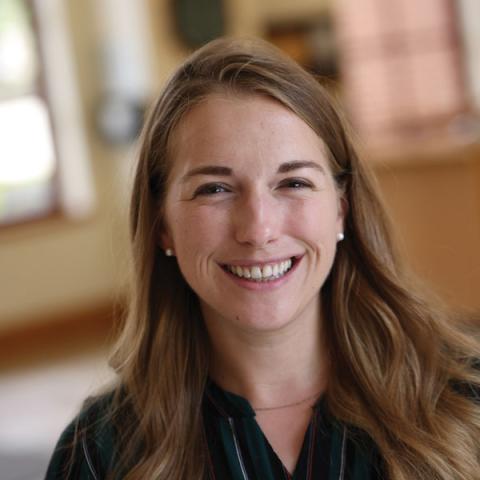
Rebecca Poe Hays, PhD, serves as associate professor of Christian Scriptures at Baylor’s Truett Seminary. She is one among many seminary faculty who have strongly supported and encouraged women in ministry.
The work of gospel ministry involves tremendous joy. Those who serve in pastoral roles—of all kinds—get to tell the story of Jesus, to act as his hands and feet in a world full of needs, to sit with the brokenhearted and suffering, to rejoice with the born and reborn, to open the Scriptures, and to break open the bread of life. There is nothing like it.
This work can also be challenging. It requires patience, perseverance, and prayer. It involves confronting the worst aspects of humanity (including the worst parts of ourselves) and the brokenness of a world that is beyond human capacity to fix. For work that inescapably involves other people, it can be lonely.

Truett’s mission is to equip those God calls to this work of ministry in and alongside Christ’s Church. Taking our cue from Scripture, we support both men and women whom God calls. Just as God called Moses, Samuel, and Jeremiah to be prophets, God also called Miriam, Deborah, and Huldah. God called Peter to proclaim the resurrection, but God called Mary Magdalene first. God made both Paul and Junia apostles. The biblical model for ministry is one of mutuality and partnership—men and women serving together in response to God’s call and in the power of the Holy Spirit. And by the Spirit’s power, Truett seeks to equip these God-called ministers.
While every minister experiences both joys and challenges, the women God calls face distinctive hurdles. The most obvious, perhaps, is that women are more likely to have their calling questioned. I have served in church contexts in which I wrote Bible study curricula and outlined sermons, for example, but could not lead the youth group in prayer if there were teenage boys present. I have heard the pain in voices of Truett students and alumnae as they processed the words of male pastors and denominational leaders who interpret Scripture differently and who therefore discredit not only these women’s ministry roles but also their very relationship with and faithfulness to God. The depths of this challenge are difficult to understand for those who have not experienced it firsthand.
Some hurdles are seemingly insignificant but can become real problems. What should I wear to preach? Ear-hook microphones were not designed for preachers with long hair! What if I don’t have pockets for the microphone battery? What do women need to consider when doing immersion baptisms that men might not have to think about? What about maternity leave? How do I respond when people stand up and walk out when I start speaking?
So how does Truett support God-called women in their ministry callings as they face these hurdles and others? In many ways—and we are constantly looking for more.
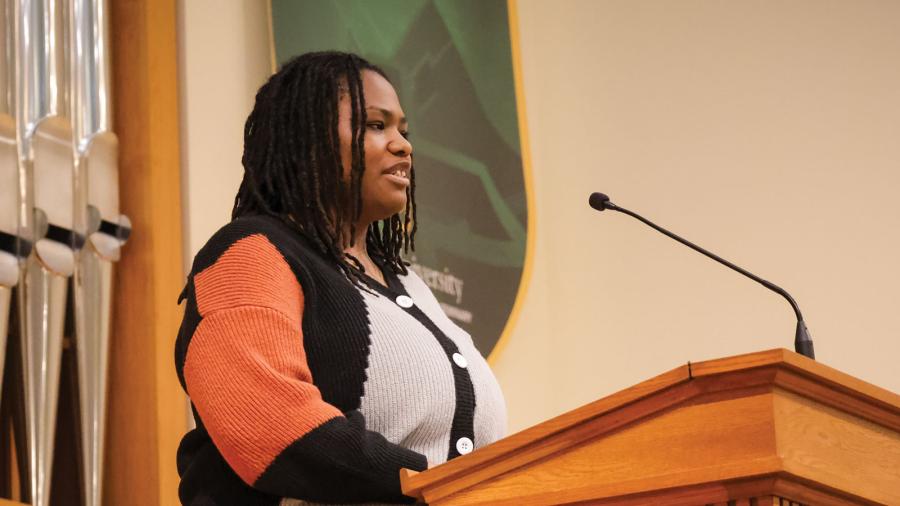
One way we support and equip women whom God calls to ministry is simply by existing as a seminary that will train them. Every Truett faculty member fully and joyfully affirms the reality of Joel 2 (that God calls sons and daughters to preach) and of Galatians 3 (that in Christ, men and women are equal). Women who sit to study Scripture, theology, preaching, evangelism, leadership, pastoral care, and so on can be confident that their professors want to equip them for the work to which God has called them. I can testify firsthand to the difference such affirmation from one’s teachers makes, and Truett occupies a critical space within an evangelical world that does not always offer such full-throated affirmation of women in all areas of ministry.
The work of gospel ministry involves tremendous joy. Those who serve in pastoral roles—of all kinds—get to tell the story of Jesus, to act as his hands and feet in a world full of needs, to sit with the brokenhearted and suffering, to rejoice with the born and reborn, to open the Scriptures, and to break open the bread of life. There is nothing like it.”
– Rebecca Poe Hays, Christian Scriptures Professor
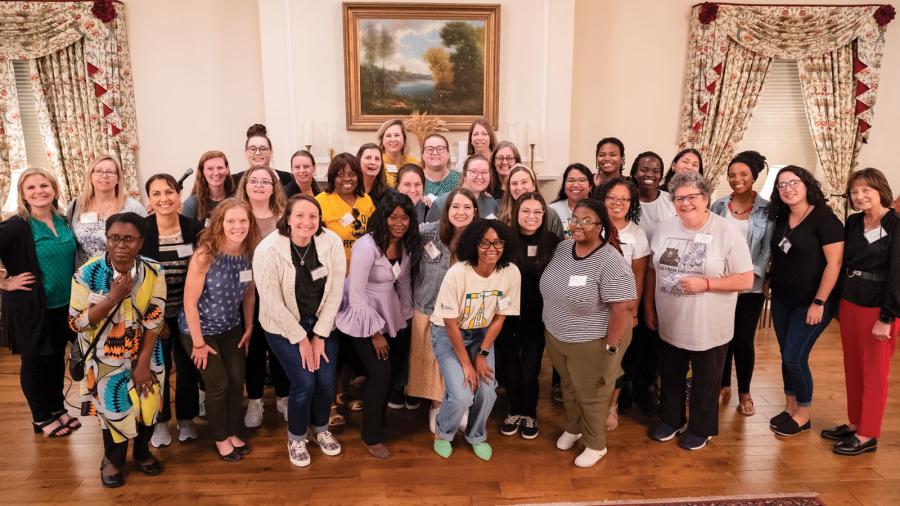
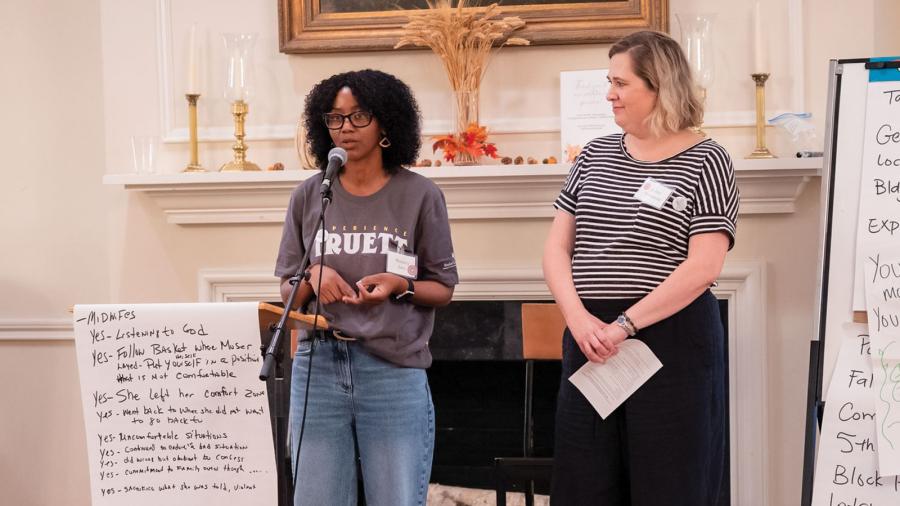
Because Truett exists in this space, we can also support women in ministry by bringing them together. Students from a range of backgrounds can join together in the work of discernment: What are my gifts? How do I respond to challenges in my own context and role? In addition to women frequently preaching in our chapel services, the Truett Women in Ministry group regularly convenes current students as well as local female pastors and ministers to learn from those further along in their vocational journeys. The Kyle Lake Center for Effective Preaching fills our pulpit with exemplary female preachers from a variety of traditions and invites students into conversation with them. Our Truett Church Network brings together alumnae serving as senior pastors, as associate pastors, as coaches, as Bible translators, as denominational leaders, as university ministers, as social workers, and more. These various roles bring with them distinct challenges, and Truett seeks to equip and support women serving in all of them.
Ephesians 4 describes the work of ministry—whatever specific form that ministry takes—as ultimately growing out of deep connectedness to Jesus and as having Jesus as its focus. The goal is never to be an amazing preacher or a world-famous evangelist. The goal is to build up the body of Christ. Truett exists to support God-called women (and men!) in the work of ministry, but if our focus ever shifts more to the called than to the Caller, then we have failed in our mission. Our ministries are not about ourselves or our rights. More than anything else, therefore, Truett equips and supports women in ministry by teaching them to know the God who calls them. We hope the time students spend in our classrooms is just the beginning of a lifelong educational journey of obedience, growth, and increased Christlikeness.
I am incredibly grateful to be serving out my calling in this place and to be serving alongside others who want to give glory to God and build up Christ’s Church. My prayer is that Truett will continue to equip God-called people—whether men or women, young or old, white, brown, or black—and that the Holy Spirit will continue to empower this work for decades to come.